
3/20/2009

the glitch dilemma

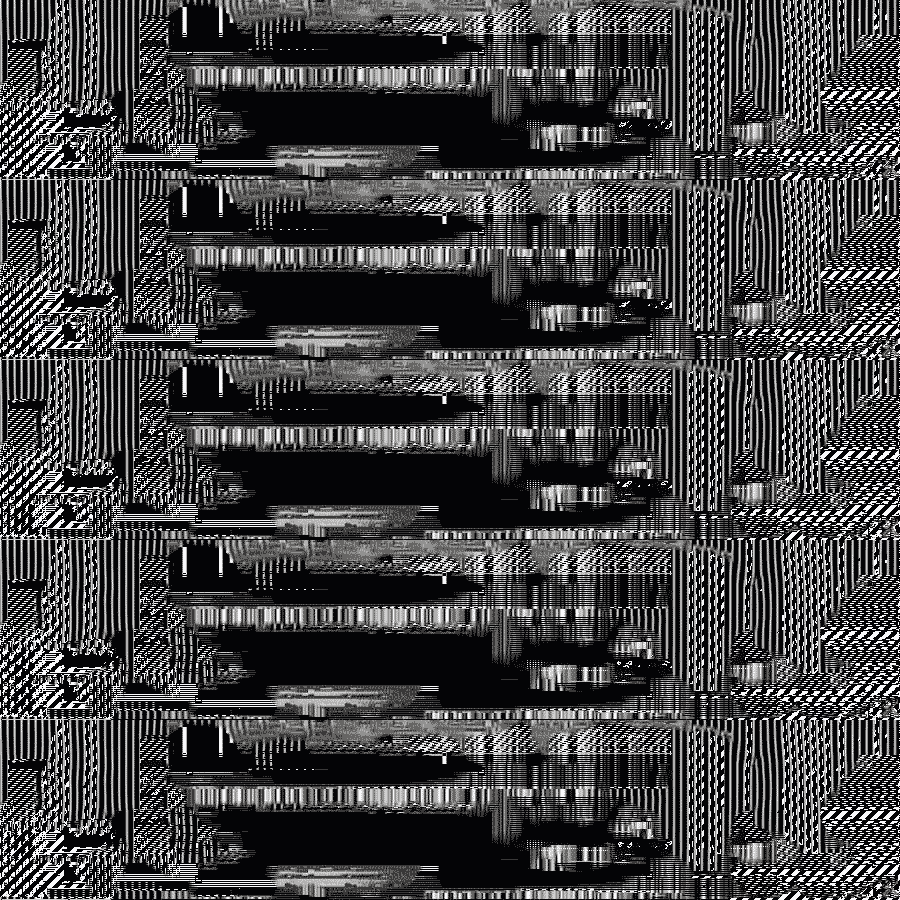
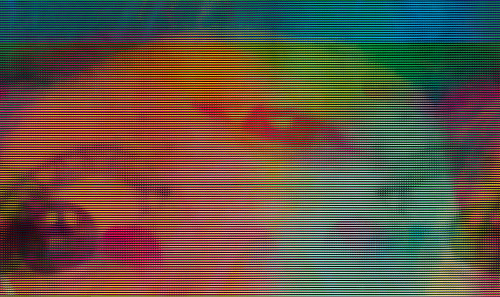
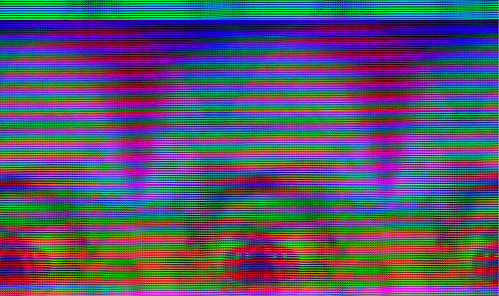
45 .: selfportraits :. How can we explain the glitch as an unexpected, abnormal mode of operandi, when the artists working process and more importantly, what the artist aimed for was abnormal in the first place? In other words, can an intended error be erroneous?
Most images have a header; the first lines of code that hold supplemental information about for instance the format, size, number of colors, and other information needed to display the image. When you save an image in the photoshop RAW format, you can choose not to include this data in the saved file (choose header=0). These portraits are made by copy-pasting the RAW image data (saved with no header) of 2 photos together in TextEdit and then saving the photos as one file. Because the RAW image data was saved without a header, the computer didn't know the dimensions and other crucial information and thus wansn't able to construct the image out of the data on its own. When I opened the image in photoshop, the program asked me to insert this information manually. This is the opportunity to 'glitch'! In the case of the 2 images above I fumbled around with the size (I made photoshop open the document in half the size of one of the original photos) and color channels. What is interesting about this method is that it is completely reversible; it doesnt destroy or harm the pictures original data in any way (although I would not recommend doing this with an original photo). I actually know exactly what is wrong with the file (I deleted the header data and gave photoshop wrong information - I bent it). This kind of glitching (I dont know if I would even call it that) is more like a bug hug, it has a tendency towards design rather then a magical obfuscated, not understandable glitch that I normally make. I go out of my way to make this point, because I have my reservations about the description of the glitch art flickr pool, especially where it states: "Please only post images that have had authentic digital glitching through computer or digi-cam error. This includes databent images (eg. inserting randomness with a hex editor)." If there is a spectrum of ('designed to accidental') glitch art, then I would locate databending inside the outside of this spectrum.
░░░░░░░░░ ░░░░░░░░░ ░░░░░░░░░ ░░░░░░░░░ ░░░░░░░░░ ░░░░░░░░░

3/15/2009

Oaktabarn


|||I|I|I|I|I||II|I|||||I|I|I| I|I||II|I|||||I|I|I| I|I||II|I|||||I|I|I| I|I||II|I|||||I|I|I|I|I||II|I||||||I|I|I|I|I||II|I|||||I|

In April we (Rosa Menkman and Goto80) will tour through Eastern Europe with Oaktabarn, a live audiovisual performance (
occasionally combined with a lecture), in which we present our bastard family of digital artifacts consisting of Noise, Glitch, Feedback and Compression.

|||I|I|I|I|I||II|I|||||I|I|I| I|I||II|I|||||I|I|I| I|I||II|I|||||I|I|I| I|I||II|I|||||I|I|I|I|I||II|I||||||I||I|
|||I|I|I|I|I||II|I|||||I|I|I| I|I||II|I|||||I|I|I| I|I||I|I|I|I|I||II|I||||||II|I|||||I|I|I| I|I||II|I|||||I|I|I|I|I||II|I|||||I||||I|I|I|I|I||II|I|||||I|I|I| I|I

Audiovisual material can be found on vimeo
Music on www.goto80.com

3/12/2009

Compress Process


The whole video is created with one and the same skype video recording; its basically a selfportrait of me jumping around.

______________
Creating this video made me think about a couple of things. First of all, the research I am doing is not about destroying the pixel. If we subscribe to wikipedia and agree that the pixel (or picture element) is the smallest item of information in an image, I would rather say that through artifacts like compression and glitch, I deconstruct the pixel of the video. I create new pixels from old pixels, with new dimensions and new pixel-properties.
Moreover, whereas pixels are normally arranged in a 2-dimensional grid, I think that we could wonder if the pixels actually has a third, or even forth dimension (in the sense that pixels are made out of different layers, with a certain opacity, that are placed on top of each other, over time). A simple thought that never occurred to me before. This requires some obvious research into the technology of the pixel.
A third thing that occurred to me is the misconception of the term compression. In general, (and also in wikipedia) data compression refers to the process of encoding information using fewer bits (or other information-bearing units) than an unencoded representation would use through use of specific encoding schemes. But when I do these types of experiments in encoding (compressing) a video file, it easily happens that a 1 minute video file (that originally only took up 87mb) takes up to 4gb of space in compressed form. It makes me wonder if compression is still a matter of compressing?
I can't seem to dodge the question of what would be this 'unencoded representation' wikipedia refers to, when we are talking about files that have been generated through a compression service like skype?


This video was successively compressed in three different (glitchy) ways. The first compression made the colors of the video unstable. In windows, the colors changed to black and white while on the mac, the video still had color. It also became pixelated (0'27-0'35).
The second compression made the video bleed. You can see what I mean with bleeding from 0'37 to 1'17. These are basically the more messed up parts of the video.
The third compression made the video very grainy, (for instance, from 2'50-3'06). Instead of playing frame by frame, the video seems to make collages of itself by putting layers triggered by the sound on top of eachother. A very weird compression mode that I also exploited in To Smell and Taste Black Matter (only seems to work when you add .wav sound to the video and compress with animation codec set on least quality).
The only filter I used was a contrast filter and a filter for keying some whites out. I also edited the video to the music.

Extraboy made the music for the video. The beginning of the song is consists of a speech synthesis fighting for room with a song composed of text and exe-data. All performed on the Amiga. Gradually this sound gets highly compressed, and at the same time the (g)rainy sounds of a malfunctioning VST enters. That is followed by a new version of the song that was recorded in the original skype video.

3/11/2009

Artifacts on Vimeo

███
A couple of weeks ago, I started a vimeo group called artifacts. This group is for videos that center around (digital) artifacts like glitch, compression, noise and feedback. Preferably used conceptually in both the music/sound and visuals of a video. I created this group because I am doing research in artifacts and I want it to be some kind of repository of footage that is significant for the kind of videos I am doing research in. As the amount of members and videos has been growing steadily, I decided to start curating the group a bit more strictly and to describe more thoroughly what the group is about.
Even though the concept of noise has many meanings, mainly because it is often used as a figure of speech, for the purposes of this group noise is best understood as an undesirable disturbance or addition to the linear signal of useful data, or as I would like to suggest, a generative quality present in any communication medium, that shows itself as an artifact. While the communication process as described by Shannon and Weaver is reasonably linear, this static notion is undermined by the overall addition of noise, particularly during the encoding / decoding step, feedback and when the messages is corrupted whilst in transmission (due to for instance the addition of noise). These interruptions involve their own technical specificities and appearances, which are often understood as artifacts (errors or misrepresentations) that obscure the original information. The word artifact stems from the Latin words ars and facere, which, put together, mean as much as ‘artificially made’ (made by human practice). The use of the word has changed over time, and differs per context. In archeology, an artifact is something that is uncovered by an
archeological endeavor. Artifacts are often called 'finds'; they are found objects. They are (normally) not created to be an artifact, but originate as a feature (of a time, a process, a culture). In archeology as well as in the digital age, the artifact is subject to many questions. These questions range from how artifacts represent the people of a time to who created the artifact and how and why?
In art-history, we see a growing tradition of music, video and intermedia artworks, in which artists make use of artifacts, to reflect on the techniques they use for their work. Sometimes these artworks research the technologies and their role in the communication process. On other occasions they are applied as a form of politics, critique, punk or simply as a celebration of the flawed. In any case, they can be used as the symbolic components that fuse the video and sound into a conceptual, synesthetic whole and, in doing so, create a new space for dialogue. So in the beginning there was noise, but today, noise is understood and recognised via many different categories, like feedback, compression and glitch artifacts.
Since I started curating the vimeo group, I ran into a couple of problems, for instance, sometimes I donot recognize artifacts as such, simply because they are not described as artifacts and they do not bear any resemblances to artifacts I already know. I am starting to become more and more aware of the fact, that for an artifact to be interesting (especially when it is not aesthetically pleasing) I need some kind of understanding of it. Either conceptually, or technically. If this is not the case, I can simply not 'connect' with it, it doesn't mean anything to me and I dismiss it. So right now, I am curating artifacts that I can connect with, either because the maker has explained the process or because the video spoke for itself. This actually got me into the problem of explaining this dictatorial way of curating to the rest of my vimeo-group-members. Are vimeo groups made for this kind of use? Or is an open community like the artifact group supposed to be more democratic?

3/09/2009

//Winter Camp

The last week I have been busy reporting from the Winter Camp. It was very interesting to meet GOTO10 and Dyne.org and have interviews with them. All my blog posts (which are 10 in total) can be found here. I did some visuals at the end party. Thanks to Marijn who made the photo!