11/30/2010

The Tipping Point of Failure - exhibition catalogue


(click on email //  fullscreen for navigating if the normal navigation does not work, or download! ;;;)
The exhibition catalogue of The Tipping Point of Failure, my solo show that is still showing in Łódź, Poland (until December the 4th)
The Catalogue has texts by jonCates, Michał Brzezinski and me!

jonCates - The Tipping Point of Failure - a solo exhibition by Rosa Menkman

Tipping Point of Failure
My dear friend jonCates wrote a piece for my exhibition  The Tipping Point of Failure catalogue. If you dont like pdfs you should read it here.

jonCates - The Tipping Point of Failure: a solo exhibition by Rosa Menkman

Rosa Menkman is the consummate theory-practitioner of the ever moving/flowing media art known contentiously enough as Glitch or Glitch Art or Noise or Noise Art or Error or Disruption or Corruption or Loss or Failure or Obsolescence or Disappearance or a not so subtle dance between all these possible poles of existence in, of and between unstable categories...

Glitch - “A form of low frequency interference, appearing as a narrow horizontal bar moving vertically through the picture.”
- Video Preservation: Glossary of Terms - Rebecca Bachman (1996)

As Menkman has written, this flow follows a movement over time through media from celluloid to CRTs to phosphor burn-ins to LCD cracks to file formats. Perhaps this flow is not so linear in chronologies but rather is distributed across multitudes of moments. And perhaps these are moments that cannot be recognized immediately as they occur but rather only from the perspectives of Last Angels of Histories.

This flow forward in reverse results in the Glitch or as 'the spirit of that time of what the glitch was' or had occurred. At that moment in time and of time-based media... of traces of tracings of what has past... we are left with all hat has been left (behind) and embedded by digital and analog systems, all of which include and express themselves over and over again, in times, as specific as formats failing or found to be debris, broken bits of histories awash and washing up against the shores of what we thought we knew, against the grains of our expectations.

These are the vector-views that Menkman's work travels for me or takes me traveling along, pulled into the wake of a movement as UCNV has said in response to Menkman: "Glitch is not dead" but can be rather claimed to be alive and kicking online, decenteralized and internationally networked in a network of social ghosts made real to the tunes of a eulogy for broadcast standards and a poetry of errors.

Time base error - “A variation in the synchronizing signals. When time base errors are large enough, they may cause skewing or flagging distortion of the video picture.”
- Video Preservation: Glossary of Terms - Rebecca Bachman (1996)

In the field of Noise Music a definition exists and is mobilized by Noise musicians to identify "Harsh Noise" from other forms of Noise Music. The harshness of Harsh Noise musics relates to the music itself (i.e via volumes, amplitudes, frequency ranges, rhythms, shifts in tempo, pacing, etc) as well as the experience of listening to the music. Harsh Noise is harsh. Glitch Art is glitched. But is it harsh? Or, is it necessarily always harsh, hard-edged or crunchy? Such were the questions posed by New Media artist and Media Art Histories scholar Paul Hertz to Rosa Menkman recently in Chicago during the GLI.TC/H festival of Noise & New Media.

Menkman's response (as we walked along Wabash Avenue beside and underneath train tracks that recall the trains that travel in her "The Collapse of PAL" performance/video) was "no, not necessarily..." and i would say yes she had already answered this question earlier with and within her work. "The Collapse of PAL" is at once harsh/hard-edged/crunchy Glitch Art, filled with broken edges and torn/bleeding pixels, and also simultaneously elegant and elegiac in it's slow electronic forms of cyberpsychedelic transformation. I use the term cyberpsychedelic to refer to the combinatory effects of mixing Cybernetics and Psychedelics as cultural influences, technologies and aesthetic principles from the 1960's to the present. Menkman's cyberpsychedelic transformation remind us of earlier Media Art made with small scale cyberpsychedelic technologies of personal transformation as well as the sense of movement and travel embedded in many of these projects. Or as Kodwo Eshun says of Kraftwerk and their Trans Europe Express project in Iara Lee's documentary Modulations: “...as soon as you travel in a train, you're in a musical instrument. The sense of being effortlessly being pulled along through stations across Europe, was a very exciting world, opening new world of automotion...” Or, as in the classic quotation from Walter Benjamin in his Theses on the Philosophy of History as he describes the Angel of History: “His face is turned toward the past. Where we perceive a chain of events, he sees one single catastrophe which keeps piling wreckage upon wreckage and hurls it in front of his feet... The storm irresistibly propels him into the future to which his back is turned, while the pile of debris before him grows skyward.” Or to begin again:

“The sky above the port was the color of television, tuned to a dead channel.” Neuromancer
- William Gibson (1984)

"200 years into the future, the data-thief is told a story. If you can find the crossroads, a crossroads, this crossroads, if you can make an archeological dig into this crossroads, you will find fragments, techno fossils, and if you can put those elements, those fragments together, you will find a code. Crack that code and you will have the keys to your future..."
- The Last Angel of History - Black Audio Film Collective (1996)

The Black Audio Film Collective introduces their speculative present of the cyberpsychedelic Afrofuturist project, The Last Angel of History, with these words. Their project focuses on reconstruction of lost, repressed or stolen histories constructing alien futures. Painting herself white, Rosa Menkman attempted to blank herself, attempted to get lost or erased between the lines of the vertical blanking interval, that flickering time difference between the last line of one frame or field and the next frame or field rendered on a display. And the results, as rendered in her instantiation of this source material, a video called "Dear mister Compression", say "Now it is too little too late [system shut down]". We are told in public talks and personal chats that this white painting that Menkman undertook to blank herself also resulted in an extreme allergic reaction which threatened her eyesight, temporarily blinding her, in a literal whiteout and erasure. In these process and moments are a confluence of emotional and technological states in the databent and brokenness of white noise to signal ratios against pink skin. As "i fail to understand you completely" is written on screen, typed out, character by character for us to see, the typist/artist (Menkman) is thinking and feeling out loud as if we are on IRC or in a live chat with her, "the noxious angel of history", while she moves through these failures of systems, systems that we now know to be both simultaneously intensely personal and computational.

The computer is a syncretic device/environment and context. computational space is social, networked and we interface with these forms socially. this is the meaning of the term: technosocial. The term technosocial arises from the field of Science, Technology, and Society Studies (STS) in discussions of the social construction of technology as related to the histories and sociologies of the Sciences. this term is of key importance to the consideration of Menkman's work undertaken in this text because we must acknowledge the depth and intensity of feeling found in her work. Her work is not cold analysis but rather it is made up of hot confrontations with computational spaces and personal experiences through Glitch Art theorypractices.

Returning to last angels of histories, data-thieves, crossroads and social networks, I find Menkman's "The Collapse of PAL" here in real and in rendered time, performing states of criticality in terms of her theorypractices. Through various technological states of collapse, she performs as The Last Angel of History, flowing through deconstructed signals; humming over the water, wherein a broken cityscape stands as if submerged, as if flooded by "connections that were just not good enough" in an apocalyptic blue phosphor. Ruins amidst lost signals losing sync, flicker and crossfade through the "storm you call progress" as the the Last Angel of History reappears and redisappears in loops replayed and instantiations remixed through unstable states of being glitched. "The Collapse of PAL" is composite signal itself, composed of a instants that are and have been previously remixed and reworked by Menkman herself.

“Remixology is the science of continuation and the art of drastic remaking, total remaking, remodelling.”
- More Brilliant than the Sun: Adventures in Sonic Fiction - Kodwo Eshun (1999)

Menkman has publicly stated her first experiences with glitch and Glitch Art as being inspired and informed by JODI, the Dutch experimental New Media Art collective who have inspired so many of us as well. Menkman first encountered JODI's work through their deconstructions of Quake, a project called Untitled Game, which has become an almost iconic work of Glitch and New Media Art. She is the leading international theory-practitioner of Glitch Art. She is as much of an inspiration for us, the international 'glitch scene' (as she calls us) or the the experimental New Media Art networks, as JODI has been for her and for our communities.

She offers us criticality through creative practice by tracing the effects of our technologies as the break, bend and disappear into forced obsolescent deaths. She cracks open and apart our expectations and asks questions through her artworks and projects. If Carolyn Forche's The Angel of History, a highly regarded poetic work, underscores that we humans have memories that we piece together in fragments in order to survive then Rosa Menkman's influential projects remind us that we humans also have technologies that we have written and that these technologies survive as memories, remembering us through their fragmentary existences. Menkman gathers and disperses her own utterances across media that is broken, machines that are haunted, and in ruins of presently obsolete protocols.

Skew - “A bending of picture at top or bottom of television screen caused by the changing of the video track angles on the tape from the time of recording to the time of playback. This can occur as a result of poor tension regulation by the VCR or by ambient conditions which affect the tape.” from: Video Preservation: Glossary of Terms - Rebecca Bachman (1996)

Menkman's writings in addition to her artistic works, as shown in this exhibition, function as a beacon, tightly focusing and broadly illuminating the key critical issues of all of this beautiful digital garbage that we all love so much. Pushing us past idle aesthetics of error or decay, Menkman articulates through a combinations of writings in and on the technosocial fabric of our times, crafting the Art of Artifacts, A Vernacular of File Formats and pivoting across these points of articulation 'far away from perfection' and at The Tipping Point of Failure.

“When you try to describe a glitch, you can never really categorize it... the moment you try to make categories, there's always an inbetween. There's always the glitch that will be right were you didnt want it. So the category is broken again... you need to go from multiple angles, so that you have this spectrum of ways of approaching it."
- Rosa Menkman in the Group Chat w/ GLI.TC/H Organizers, an interview by Nicholas O'Brien for badatsports: http://www.vimeo.com/15370640

"...each fragment reveals the rose from a different angle, he remembered, but delta swept over him before he could ask himself what that might mean."
- Fragments of A Hologram Rose - William Gibson (1977)


#--->
jonCates makes, organizes and teaches experimental New Media Art. His projects have been presented internationally at various events in locations such as Beijing, Madrid and Mexico City; nationally in Chicago, New York and Boston and are widely distributed online. Art Games, experimental Machinima, Computer Witchcraft, digitalPunk and Noise music are some of the unstable categories that his work playfully moves through.

jonCates teaches in the New Media path of study of the Film, Video & New Media Department at The School of the Art Institute of Chicago. His research and writings are on Media Art Histories and related subjects. In 2007, he initiated the Phil Morton Memorial Research Archive to archive and freely distribute the Media Art work of Phil Morton and associated research. He writes on these topics for Furtherfield.org as well as in other online and offline publications.

//The Tipping Point of Failure - Rosa Menkman

Tipping Point of Failure
The Tipping Point of Failure - Rosa Menkman
Text from the exhibition catalogue.

Modern digital cultures are inseparable from keywords like functionality, smoothness, order and progress. Interaction designers, programmers and interface developers all work together to understand and execute these mantras. But to really understand these keywords, they have to be defined in relation to what they are not. A successful product designer does not design for the average customer, but instead for the marginal, extreme customer; because when taking the margins as the rule, the middle will take care of itself. This is why studying the qualities of disfunction, irregularities, breaks, disorder, damage or even demolition are as important in the development of a new technological product as the researching of its perfect flows and this is also one of the reasons why I think it is important to study failure. The concepts of perfection and failure are a tradeoff of each other. If we want to understand and pursue perfection - we can find this in the pursuit of failure.

Over the last months I have visited many different failure (and glitch in particular) related conferences (festivals and symposia) and I have learned a lot from the different voices and perspectives within this field that is, time and time again, referred to as ‘in a constant state of flux’, ‘new’, ‘other’ or even ‘indescribable’. The more people on the floor or in the conversation about glitch, the more diverse the perspectives on glitch become; the meaning of a glitch depends greatly on the background and the conceptual application that is chosen by the person experiencing it or talking about it.
But however mysterious the definition of glitch is, I have also noticed some very pronounced patterns that emerged between the different with failure induced glitch events. Some problems, subjects, frameworks or keywords keep floating to the surface and seem to be the focal points of glitch theory at this point: subjects like P/politics, memory or preservation, genre/effect, ethics, aesthetics and design, bio/virus, copyright and economics or history have their own panel in every other conference, while words like the Other, transgressive, progressive, order, affect, uncanny, void, materiality, gender or paradox seem to be part of the obligatory failure and glitch b/lingo.
Which makes me wonder – What is the difference between failure and glitch? And if the glitch (or failure) subject is really in such a state of flux, or indefinable, how is it possible to have a reasonable conversation about it? Can glitch or failure be overcome, and where or how can it be conquered until it no longer exists as its original pure and indescribable form? In other words, where is the tipping point of failure and where is the tipping point of glitch?

In wikipedia I read: “Failure refers to the state or condition of not meeting a desirable or intended objective, and may be viewed as the opposite of success”. When I read this I know that glossary-wise this might be true, but personally I keep my reservations about subscribing to this explanation; there also needs to be place for for instance successful failure - a contradiction in terms that I would rather live with then without...
I think that wether failure should be defined in contradiction to success or not, depends on the context in which the term ‘failure’ is used. It is a very complex problem - as complex maybe as the problem of glitch itself. This is why right now I am most interested in thinking about failure in relation to the definition of glitch.

When I posed the question of failure vs. glitch in the closing panel at GLI.TC/H (a festival that took place in Chicago  from 29 of September - 3th of October and that I co-organized), an interesting answer was given by Anton Marini, who declared that: “Overcoming failure is to accept it. Overcoming glitch is to incorporate it.” Which I think is was phrased excellently. Of course I also have a personal interpretation of these tipping points, which I will write up more elaborately now.

Technically, a glitch is a short lived fault or break from an expected flow within a computer system, typically experienced as an uncanny happening, a dangerous momentum of something other, unordered, unknown and unwanted; The glitch is where the digital flow fails to answer to our expectations.
The glitch fulfills the role of 'Other’ - it is the utterance of a computer that does not subordinate to the societal norms and rules or protocols its users and programmers have implemented upon it. It is the behavior that does not fit-in and is usually avoided or if possible, completely excluded from the system (by for instance debugging).
After the momentum of the failure, there are a couple of possible ways the glitch can ‘tip’. First of all, if the cause of the computers erratic behavior comes to the light, the glitch disappears and what is left after this is the effect of a bug that (often) has a certain debugging method. If the cause of the failure stays unknown, the momentum of glitch transforms into a phenomenon (or the memory thereof) that gains meaning from its context; the person who experiences the glitch, the technology that is malfunctioning and other perspectives that are at stake. In any case, the uncanny momentum of glitch is open to symbolical or metaphorical connotations - that take the interruption away from its strictly technological being. This openness of glitch is what glitch artists play with and is what makes glitch so hard to define.

In my opinion failure can thus be considered as the primary, under-developed state of glitch, which it will inevitably (and fast) tip away from. Failure is the static point of glitch, frozen in time, yet only nano seconds long, while its tipping point marks the active flow in which the glitch moves away from failure into and through its many new possible conceptions. The tipping point of failure thus marks the inclusion of glitch into or the conception of glitch as a paradigm, which can but does not need to demystify it. 

In the case of glitch-art, the roles of failure and glitch are inevitably more complex because the definitions of glitch and its tipping point(s) are more complex - depending of course on the perspective chosen - it moves away from a strictly technological definition to a more metaphorical one. My stand points on glitch-art are therefore multiple and never followed each other in a clean, clear-cut order. But for the sake of clarity I will try to describe it here as linear as possible.

My exhibition ‘The Tipping Point of Failure’ is about the role of failure in my different phases of glitch art. In my first practical glitch-art I passively framed accidental glitches; the monumental failures of the computer. I collected glitches that resulted from active tinkering and explored new ways in which I could exploit the computers failing draw-capabilities. I also moved along with re-programming and pre-programmed glitches.
These first stages are marked by my fascination with hunting down a formal aesthetics of failure that was (or was not) based on technical crudeness; an impetuous glitching that slowly commodified the dynamics, the norms and values of what once was digital punk - although I did not (always) realize this.
The work that symbolizes this development is The Vernacular of File Formats; A collection of 7 videos and 10 file format-images in which I actively demystify these most used glitch-effects. In this work I show that the tinkered-glitch has already been transformed into a filter and something that could even be called a commodity or paradigm - but the work also raises the question if this kind of glitching has actually always already been a ready-made commodity (instead of a new form..).
My Videoscapes, Glitch Studies Manifesto and the Collapse of PAL show the changing role (or tipping point) of failure in my work. In these works or ‘other’ phase of my glitch-art I am trying to make more conceptualized or narrative glitch-art. While failure sometimes still plays a role, the starting point of these works lies within the exploration of a concept, a call for studying glitch itself or even a narrative rather then failure itself.
The exhibitions “the Tipping Point of Failure” does not only refer to the inception of glitch, but should thus also be understood as a critique to the one dimensional “Aesthetics of Failure” that glitch-art is so often aligned with. It is an ode to everything that can happen after the tipping point of failure - within the realm of pure, not yet described glitch-art.

11/22/2010

Interview with Felipe Melhado

Entering the void
Felipe Melhado is a student in Brazil who is one of (quite a few) people writing their master thesis on glitch art right now. He emailed me with a couple of questions for his thesis that I thought were very interesting to answer, here they are = )

- When and how did you get in touch with glitch art? Why does it interest you?
The first work of digital glitch art that I remember triggered me to think about this genre was in the exhibition World Wide Wrong by Jodi in 2005. After seeing this work I started reading and writing about glitch. Just a little bit later I also started making my own work - because I think particular research in a subject like glitch art can benefit a lot from experiences / a practical point of view.

- How does glitch art appear in your artistic production?
When I first started with glitch, or digitally broken imagery I was just tinkering. I was trying out different forms and seeing how different files, softwares and hardwares react to different, abnormal ways of handling them. This year I tried to sum up a part of that earlier work in the Vernacular of File Formats.
Later I took this kind of work one step further and started to incorporate my theoretical writings in this kind of research - this is when I also wrote the glitch studies manifesto and started making my acousmatic videoscapes.
Right now I am trying to use glitches in more complex ways and not show them as an esthetic alone - I try to tell stories with them. An example of this is for instance the Collapse of PAL, which is an AV performance about the ending of the television signal PAL (which I believe you also used in Brazil).

- What is the conceptual intention found at your artworks when you use the digital errors aesthetic?
There is not one conceptual intention - I think there is many ways to use the glitch and I always try to find new ways. But I do think there is one overarching premise:
I am trying to research the tipping point of failure - which i tried to illustrate in the vernacular of file formats - and which basically means a research into how errors become newly accepted, standardized forms or styles. How do the many different glitches  transform into filters of big commercial softwares like adobe premiere and after effects? I try to keep an eye on the process of standardization and commodification of glitch.

- Which procedures do you use to achieve the digital errors?
Not one, it really depends on the hard or software I am working with at that point.

- Why do you think the error is interesting to so many digital artists?
Error is a very classic subject that has played a role in art since .. "forever"; Artists often play with tensions and breaks to show  some generalizations of society (which I wrote more about in the in-between manifesto).
Modern culture is in my opinion heavily depending on paradoxes and binary oppositions: open/closed, proprietary/free, hard/software, 0/1, right/wrong, S/Z, just to name a few. This is why there are so many categories for the artist to break - and why so many artists (quite easily) feel a need to fight, break explore and express themselves using these oppositions.
The glitch is something that is inbetween all these things; it sort of functions as a membrane that constitutes new categories between absolutes. This is also why I think the / symbol should be the sign for glitch.

- Do you have any references of artists who explore the error as an aesthetics, not necessarily using digital glitches?
(I am answering your question as if you wrote glitch instead of error - i think the two might have slightly different meanings and histories -- which is maybe something to think about).
The glitch incorporates many different understandings; error, imperfect, mistake or failure, and all of these concepts have lineages that go back as early as human cultures evolved.
Cultures are defined by norms and specific ways of operating but also by errors or misbehaving (I think about Foucault and his writing about the madman outside of a particular culture, who is as important in defining a culture as the normal man of that culture :: they are two sides of the same coin).
Artists often play with tensions and oppositions. The error is therefore a natural subject in art, that you can recognize in many early and later artforms.

But I would also not want to exclude early Greek or Roman art in which the artists led themselves by the cracks (the imperfections) of the marble..
There is a whole tradition of artists researching the materiality (and the particularities or imperfections) of their art - Vertov playing with cameras, Len Lye and Brakhage with celluloid or Paik with CRTs, just to name a view that use film, but I could do the same for photography, sound, architecture carpets or glass.

It really depends on how you define your beginning concept; the term glitch - as a political strategy, something purely digital or a aesthetical, economical or material research.. there are endless histories of glitch.

11/11/2010

//Videoguerrilha Sao Paulo

Sao Paulo videoguerrilhatried to map out some projections but we only had 2 days and it was to little especially cause I also have to work during the daytime.
I arrived safely in Brazil!
My bag however did not make it - KLM is still looking for it (or so they say) they never put it in the system which is a bad sign - ouch! The bag had some of my new hardware, cablebag and underwear in it! I already bought a new toothbrush but I dont feel really happy about this...
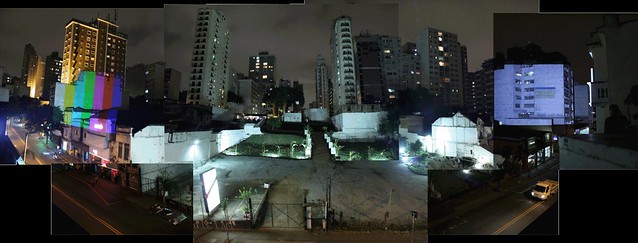
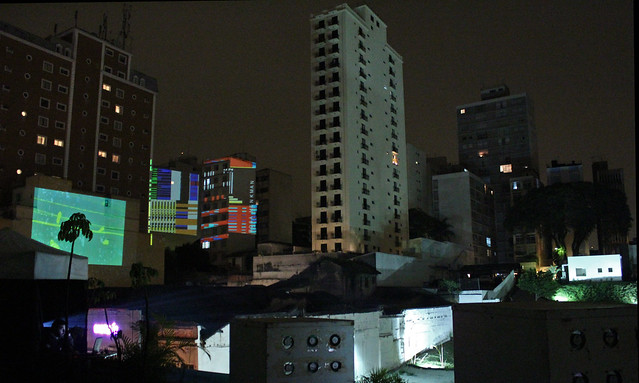
Good news: I am actually too busy for caring cause yesterday my Residency at Labmis started (the museum for sound and images) where I will be transforming the Glitch Studies Manifesto into a movie and on top of that I am doing visuals at Videoguerrilha the coming days in one of the main streets of Sao Paulo. It is a huge project that involves 20x20.000 lumens guerrilha-style-installed beamers on rooftops and in appartments that will project on the empty walls of the big buildings.. 
We tested some mappings yesterday (see photo) and it looks really cool and i am almost a bit overwhelemd. 
More to come..

░░░░░░░░░░░░░░░░░░░░░░░░░░░░░░

11/07/2010

Pursuit of Failure symposium in Berlin

The accident doesn’t equal failure, but instead erects a new significant state, which would otherwise not have been possible to perceive and that can “reveal something absolutely necessary to knowledge.”
Lotringer, Sylvere and Paul Virilio. The Accident of Art. Semiotext(e): New York, 2005. p. 63.

A small text published the Pursuit of Failure symposium catalogue

The Tipping Point of Failure
The concepts of success and failure can be understood as a tradeoff of each other. So, if we want to understand success and reach achievements, we also have to understand failure – a study about failure is also a study about success. This is one of the premises for the Pursuit of Failure symposium in Berlin.
Over the last months I have visited many different failure related (glitch in particular) conferences // festivals // symposia and I have learned a lot from the different voices and perspectives within this field that is, time and time again, referred to as "in a constant state of flux", "new", "other" or even "indescribable".
The more people on the floor or in the conversation about glitch, the more diverse the perspectives on glitch become; the meaning of a glitch depends greatly on the technology, background and the perspective that is taken by the person experiencing or talking about it.

But however mysterious the definition of glitch is, I have also seen some very pronounced patterns emerge between the different with failure induced glitch events (some problems, subjects, frameworks or keywords kept floating to the surface – and seem to be the focal points of glitch theory at this point). Which have made me wonder – if the glitch (or noise or failure) subject is really in such a state of flux, or indefinable, how is it possible in the first place to have a reasonable conversation about it? The following is a reflection of my thoughts about this problem of glitch theory.

First of all, theorists seem to approach a new subject with a standard framework; they know which perspectives will be most likely to advance the learning about an unknown area – they use a sort of logic to conquer an unknown territory (I don’t know if this is a result of instinct or learning). There might even be a readymade paradigm that can be used more widely to attack ‘the unknown’, and to frame it – to help make sense of this ‘unknown’, or a comprehensive set of critical concepts that can be easily applied to frameworks of different subjects.
I am thinking about standard issues in new paradigms like P/politics, memory, genre, ethics, aesthetics, history, economy etc that, in every other conference I have attended had a panel named or referencing them, while words like “the other”, transgressive, affect, gender or paradoxical seem to have become terms that are part of the glitch b/lingo.

A question that I feel has to be overcome: when do we overcome glitch, failure or noise? Where do we conquer it until it no longer exists as a pure form, a form that invokes questions or that is about a process of surprise?
Questions that I would like to put more attention too are:
Where is the tipping point of failure?
Is this tipping point maybe tied-in with the existence of a paradigm of glitch art – or a paradigm of failure?


11/04/2010

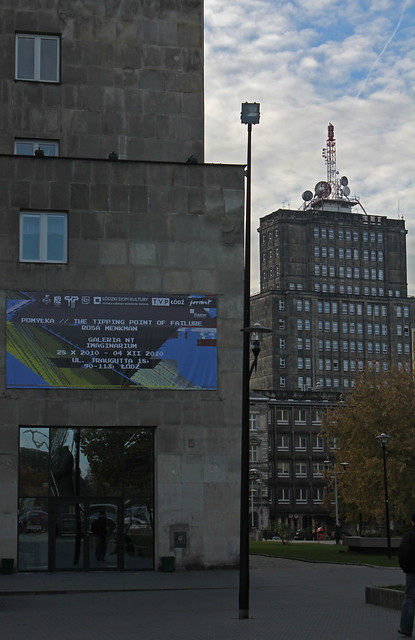
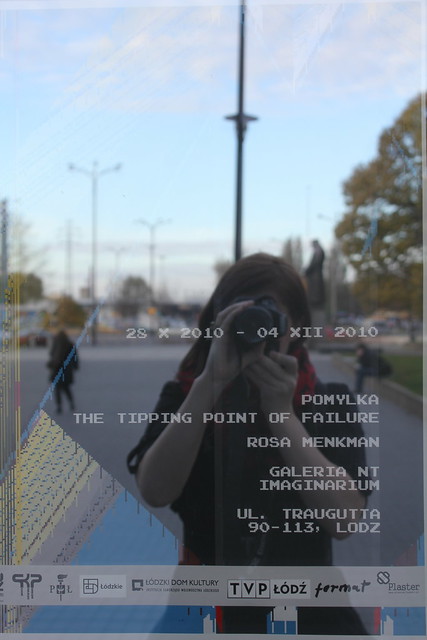
The Tipping Point of Failure opening!


Tipping Point of FailureTipping Point of FailureTipping Point of Failure
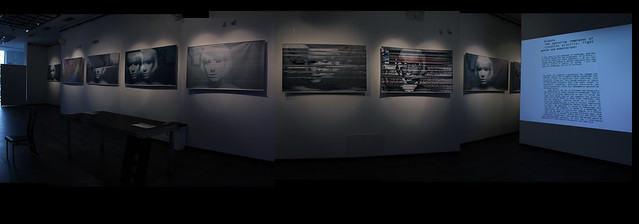
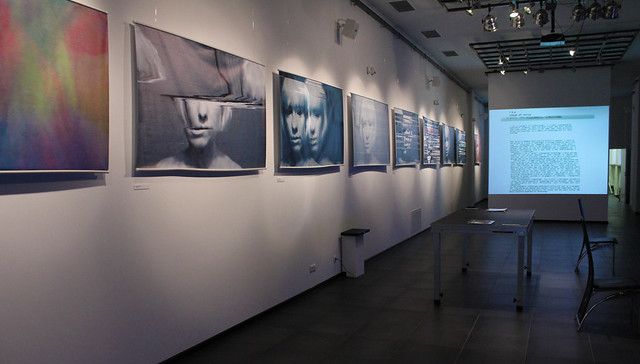
The Tipping Point of Failure, my first solo exhibition, just opened in Łódź, Poland. The exhibition shows four of my works; the Vernacular of File Formats (consisting of 8 different films, 10 prints and a text based on my research in file formats), The Glitch Studies Manifesto (the text and center piece of the exhibition), The Collapse of PAL (a rememberance of the PAL signal) and my acousmatic videoscapes (8 musicvideos on LCDs, based on theories of Pierre Schaeffer).
The exhibition will run until the 4th of December. More + digital catalogue to come -- which will explain more about the title of the exhibition!
For reviews in Polish here and here

11/03/2010

Videos of Pulsewave NYC 9/25/10 by EM Dash


Last September I did visuals for Disasterpeace, ChipHydra and tRasH cAn maN at the Tank in New York. These are some videos!

GLI.TC/H recap by Evan Meany

A really nice recap of the events of the GLI.TC/H Conference organized in Chicago by Nick Briz, Jon Satrom, Evan Meaney and me. Video shot and edited by Evan! 
The video also features some footage of the impromptu performance Vade (anton marini) and I did at the last performance night in the Nightingale.