7/27/2009

//Hyper Hyper Blip festival Europe

hyper hyper
Surprised and happy I accepted Paris request to help him do visuals for Bit Shifter, Covox and Minusbaby during Blip Festival Europe in Aalborg, Copenhagen. Paris makes glitchy looking visuals with his self programmed Gameboy advance and GP2X.
I am not really used to play with somebody so I learned a lot from him and we had a lot of fun. I hope I can find some photos of it somewhere. But for now, there is only hyper hyper internet and scøøtah.

7/23/2009

Alternative Algorithms

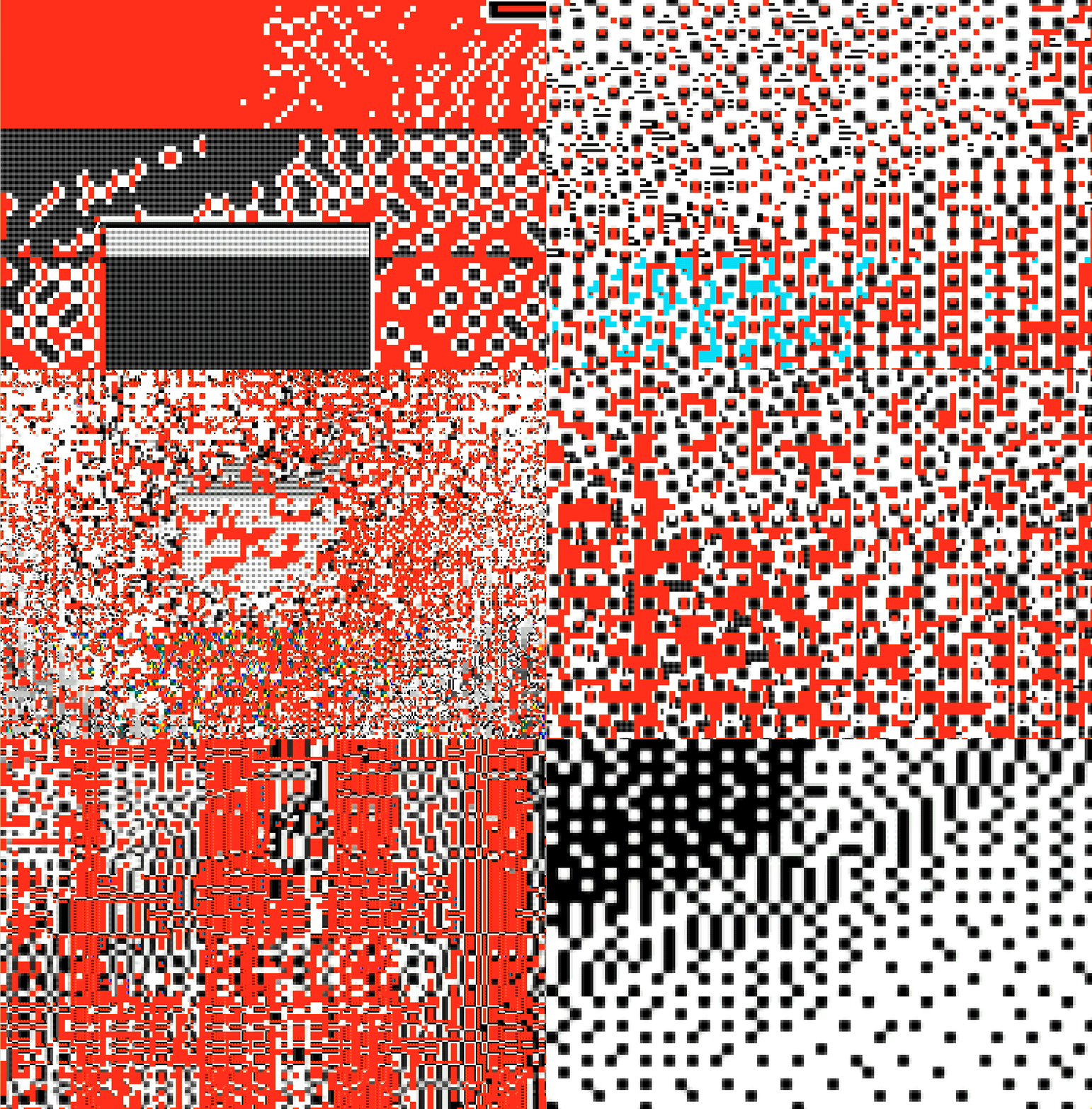
An image from 1:1 by Lisa Jevbratt.

The IP Browser
This is a one year old project on alternative algorithms that I never posted, so here it comes on its one year anniversary (project was done in collaboration w/ Alexander Galloway and DMI/govcom.org)

In this project we wished to explore number spaces, specifically the numerical range of available IP addresses. To view this numerical space, we created a web browser with a limited set of features: the user can either surf to the next higher IP address or the next lower IP address using forward and backward buttons. Like a radio scanner, the browser skips over empty parts of the spectrum, incrementing the current IP address upward or downward until the next available web server is found. In this way, the user is able to browse according to specific IP address neighborhoods.

7/22/2009

From enchanting to the default cultivation of artifacts

From software art to generic manipulation
Technicians and engineers (the ‘debuggers’) within the digital realm, often occupy themselves with the task to control erratic reactions and behaviors of files and softwares. Complex compression algorithms for mobile phones, DVDs and MP3s for instance, must minimize the amount of artifacts and make the medium as transparent as possible. In glitch art, some of these technicians and engineers (the “rebuggers”) engage themselves in a completely opposite practice. They often seek to prompt and amplify artifacts (like glitches) on purpose and even write software that only functions to (re)create these artifacts.
The standardization of glitch-sound has been an ongoing development within the realm of music for over 10 years. In the visual realm we can detect a younger but similar growth of glitch generation tools. One starting point of this trend can be found in the popular Glitchbrowser. The Glitchbrowser (Lima, Dimitre, Iman Moradi, and Ant Scott. 02.12.2005 – 18.03.2009) is an internet based browser that encodes web pages and returns them to the user with 'damaged’ pictures; it mimics transmission errors.
The Glitchbrowser itself was (in my opinion) an autonomous work of software art, but the browser also made it possible for anyone to download the generated images and to present them independently. In this sense it was often used as a ‘glitch-image generation tool’. The Glitchbrowser was an example of a still growing amount of glitch-image generation softwares and plugins like for instance Corrupt™ (2006), GlitchMonkey (2007) and Bytemolester (2008). These scripts and plugins all generate results similar to the Glitchbrowsers, but are applied in different ways and environments (they work for instance as a plugin or as an executable).

Video (art)effects
From 2008 the field of video glitch softwares also underwent major developments. As became obvious in my how to datamosh (ecology) post, many people work on particular glitch effects at the same time. In March Andrew Benson even released a MAX patch that VJs can use to trigger the glitch/compression-video effects [no longer artifacts, but maybe (art)effects?] in real time.
Many of these plugins generate images that are far from the ‘true’ glitch; they just imitate the look of artifacts that were already explored within older conceptual art projects. Vades Glitch File Reader (2009) for Quartz Composer plugin for instance, is an almost complete translation of the DataDada software by August Black (2003). But whereas the ‘original’ DataDada was mostly politically engaged, in the Glitch File Reader we can recognize an emphasis on software aesthetics and design.
Every technology that is being glitched leaves a specific aesthetic or fingerprint on the final result. Today we can recognize a trend in which these designs of ‘original’ glitch art are used to model generic effects. With the help of these effects any user can handle a broad range of data types in predetermined ways and create what can best be described as a caricature, or mimic of the original imperfect fingerprint.
For instance, since 2001 NoteNdo has been performing his live visuals generated with a circuit bent NES console. He has played at many big festivals and the fingerprint of his console has inspired many people to also start circuitbending. Because circuitbending involves a certain threshold (you need a basic understanding of electronics and the right tools), it wasn’t a big surprise to me to see (at the beginning of 2009) that programmers started writing softwares that imitate (emulate) the same effect, but that didn’t involve actual hardware bending. A recent example created by no-carrier is the GlitchNES, a software that “causes graphical glitches similar to hardware circuit-bending.” [btw! I am looking forward to seeing him playing with his software live this weekend at Blip Europe - I will post some photos]
Another NES-glitch opportunity presented itself in the (more complex) Quartz Composer plugin Open Emu. With the help of this plugin, “you can now software 'bend' a virtual NES, in realtime.”
I think that whereas the original NoteNdo console is more politically engaged (the opening up of a closed technology to create alternative possibilities), the derivative GlitchNES and Open Emu put an emphasis on software aesthetics and design and the recreation (or emulation) of a fingerprint.

Software art vs. Generative art?
To differentiate between the two apparent categories, the differentiation between Software art and Generative art could be helpful. In 2003, Florian Cramer wrote that while all digital art is software-based, it can be relevant to discuss what role software plays in the creative processes. Cramer argues that in software art the semantics of software itself are of vital importance to both the creation and the execution of the art piece. “What is crucial here is not the result but the process triggered in the computer by the program code.”
In generative art, software is mostly used as an external aid. It is one possibility amongst others to create a process from which a final work of art follows. Generative art “refers to any art practice where the artist creates a process, such as a set of natural language rules, which is set into motion, creating a complete work.” While the programs used to create works that focus on syntax and aesthetics, the images created by these programs are often autonomous.
This leads to a distinction between two types of artifacts: ideal and designed. Very few artifacts are completely unintentional (ideal) and artifacts are not per se completely manipulatable (designable) since they still have to resemble the artifact in question. Nevertheless, this distinction enables us to discuss the degree of human control or agency over the artifact. The type of glitch that is manufactured under complete human control, (often) doesn’t involve the questioning of protocols, genre, expectations, interface and/or frames of reference. It could be argued that its politics are (mostly) gone in favor of aesthetics and style. An example of this is for instance no-carriers GlitchNES, who’s technique I would prefer to call conservative or moderated glitching or, following Moradi, the 'glitch-alike'.
We can voice an obvious critique; to design an artifact means to domesticate it. When an artifact or glitch becomes domesticated, controllable by a tool and spread out for a wider audience to use, it loses (at least part of) its enchantment and becomes a lot more predictable. Then it is no longer a glitch, but a filter that consists of presets and/or a default settings. It is no longer a break from a flow within a technology, or a method to open up the political discourse but instead a cultivation, another norm.
A striking result of cultivated glitches can be seen during credits of America’s Next Top Model (Banks, Tyra. US: 2009), a television program in which a number of young women train and compete to obtain the title of America’s Next Top Model. The credits of the 2009 series are broken by different glitches that produce a new, perfect model. In these credits, the glitch has become a metaphor for imperfect (not yet perfectly accepted) aesthetics, instead of a break from the norm.

Amerika, Mark. "Cultivated Glitches."
Professor VJ: March 1, 2006.
Betancourt, Michael. “Technesthesia and Synaesthesia.”
Vague Terrain: February 9, 2009.

/////////////////////A list of glitch software tools
/// [suggestions are welcome!]/////////
Video / Image /
Browser /Hardware bending tutorial / Music
Vade: Glitch (alike) for VJs
Sven Konig: Appropirate! / Download finished!
Dan Winkler and Anton Marini: Open Emu
no-carrier: GlitchNES
Benjamin Gaulon: Corrupt™
Károly Kiripolszky: ByteMolester 0.9
Iman Moradi, Ant Scott and Dimitre Lima: glitchbrowser
Youpy: Glitchmonkey
August Black: Datadada
Cementimental: nes bending
Notendo: nes bending
Karl Klomp: videomixer bending
Illformed VST
Glitch NintendoDS
Mp3 fuckups
Gleetchlab
Noiser

7/20/2009

glitch night

Some time ago, Performative fail was part of a Glitch video night Organized by Nick Briz at the UCF Cinematheque (April 21th 2009). As I am still curating collections of different artifact videos, I like these kinds of 'personal favorites' lists (so I share them with here!):

Arcangel and Constantini. Atari Noise 2000 0:58
Rosa Menkman. Performative fail 2008 4:26
Karl Klomp. tiedoe 2005 3:28
Karl Klomp. Rex 2005 3:32
Joe Roche. Vortex Accumulator Black Mirror 2008 Jimmy 1:07
Nick Briz. From the Ground Up In Order Embrace 2007 1:25
Nick Briz. Binary Quotes 2008 5:22
Brian McKenna Operation Twins 2009 4:24
Teen Novel Something having to do with clouds without using the word cloud 2008 4:57
Evan Meany. to hold a future body so close to one’s own - selected portraits 2008 4:07
Evan Meaney. Beneath the Pressure of the Sky 2008 10:57
Jon Satrom.
kolobokz 2001 6:12
Morgan Higby Flowers.
Panasonic AG-77 2008 13:17

Especially for this night, Evan Meany wrote a little piece to introduce glitch art which can be found here

"Glitching represents an attempt to understand the liminality between translation and interpretation though methodical alteration and systematic intervention of digital files."

\\\\\\\\\\\\\\\\\\\\\\\\\\\\\\\\\\\\\\\\\\\\\\\\\\\\\\\\\\\\\\\\\\\\\\\

Another Glitch night that took place (in 2008) was curated by Jon Satrom and called
"Glitch: Creative Problem Creating"


Often considered to be a problem, errors, glitches, and accidents are nonetheless a part of the art-marking process. Curated by new media artist and SAIC faculty member Jon Satrom, this program gathers films, videos, hacked TV broadcasts, interactive work, and modified video games that revel in failure, rejoice in errors, and celebrate the happy accident. Works showed on this night included:

SUICIDE SOLUTION (Brody Condon, 2004)
LINE
(Siebren Versteeg (2000)
486 SHORT VIDEOS (LoVid, 2008)
gameboy_ultraF_uk, (Corby & Baily, 2001)
ATARI NOISE (Arcangel Constantini, 2000)
THE WEBSITE IS DOWN (Josh Weinberg, 2008) interview
TIEDOE (Karl Komp & Totek, 2008)
Various formats (Jon Satrom)
blinq (Billy Roisz, 2002)
the future of human containment (Michaela Schwentner, 2001)
Film In Which There Appear Edge Lettering, Sprocket Holes, Dirt Particles, Etc (Owen Land, 1965-66)
Boomerang (Richard Serra & Nancy Holt 1974)
Panasonic AG-77 (Morgan Higby Flowers, 2008), another video
kolobokz (jon satrom, 2001)
MyDesktop OSX10.4.7 (JODI, 2008)
Enter The Devil (reMI 2000)

\\\\\\\\\\\\\\\\\\\\\\\\\\\\\\\\\\\\\\\\\\\\\\\\\\\\\\\\\\\\\\\\\\\\\\\

7/16/2009

//Planet off / Planet on || the Collaborative City

Amsterdam
Tonight I will do visuals @ Planet off / Planet on @ the Rooms of Redbull.

At the 'Rooms of Red Bull'- house, Born Digital organizes a multiplayer audiovisual workshop: an interactive event where promising media talent is invited to create art on‐the‐spot.
The theme for the day is 'the Collaborative City'. DJ’s and VJ’s will remix audio and video content, while graphic artists cooperate on the creation of visual art. No preparation, just LIVE-collaboration. Also, the event will provide artists of different disciplines with the opportunity of showcasing their work. The exhibition room will feature art installations by artists from all over the country.
17/9/2009 || 21.00 - 3.00 / Oudezijds Achterburgwal 24, Amsterdam || 5 euros.

7/12/2009

STANDING ON THE SHOULDERS OF GIANTS POSTER

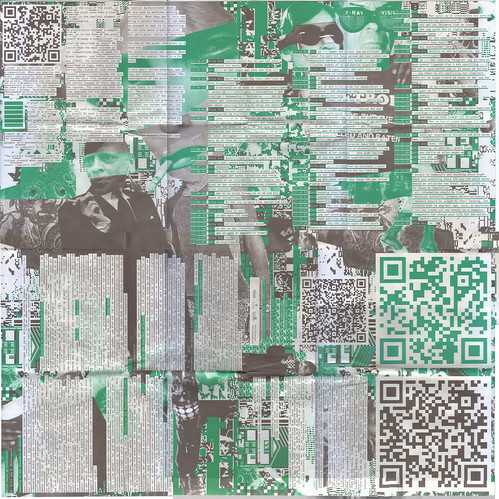
The poster of the exhibition STANDING ON THE SHOULDERS OF GIANTS by Jacob Sikker Remin. With a texts on pixels by me and Anders (and others) and some pixel art by Raquel.

Also, a frame of Radio Dada is part of the pixel exhibition @ UAVM

7/10/2009

gravitational radiation

Untitled-1

my appearance is your canvas
your quirks are your brush
you drag it
imperfections caused through decay

all your wildness does not need to be tamed
no need for acceptance
the positive feedback
there are no norms anymore

Accidents between us
communication flaws and frictions
I did not mean to speak another language
I did not mean to burn

there is no acceptance
there is nothing present
only incineration i must face

How to understand your devastation
How to make paths through something I still not recognize
...I can only follow tides of madness

I travel along, no more defined by time
No more now or before
I am on the spot, transforming within the real

what were once possibilities is now faded
gravitational radiation
a new orbit has started


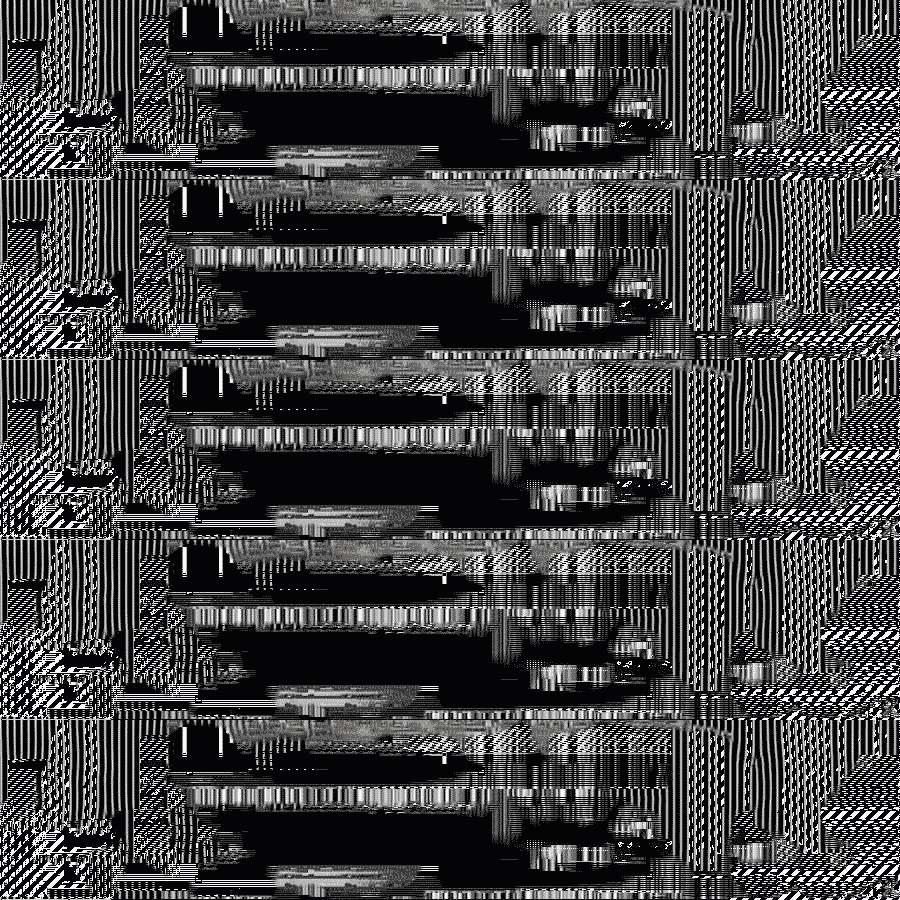
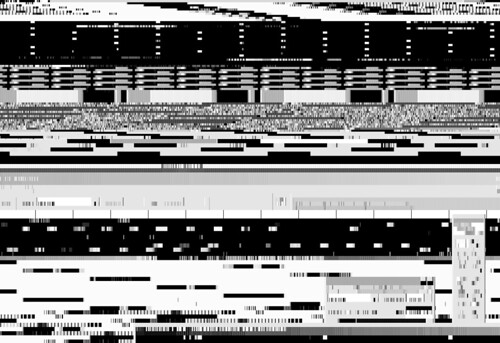
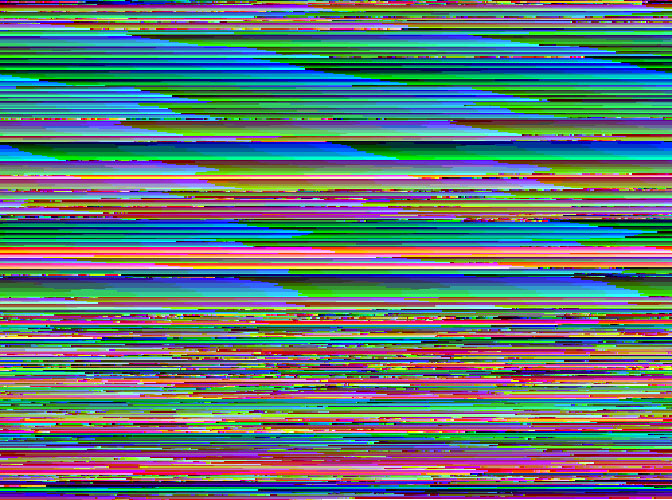
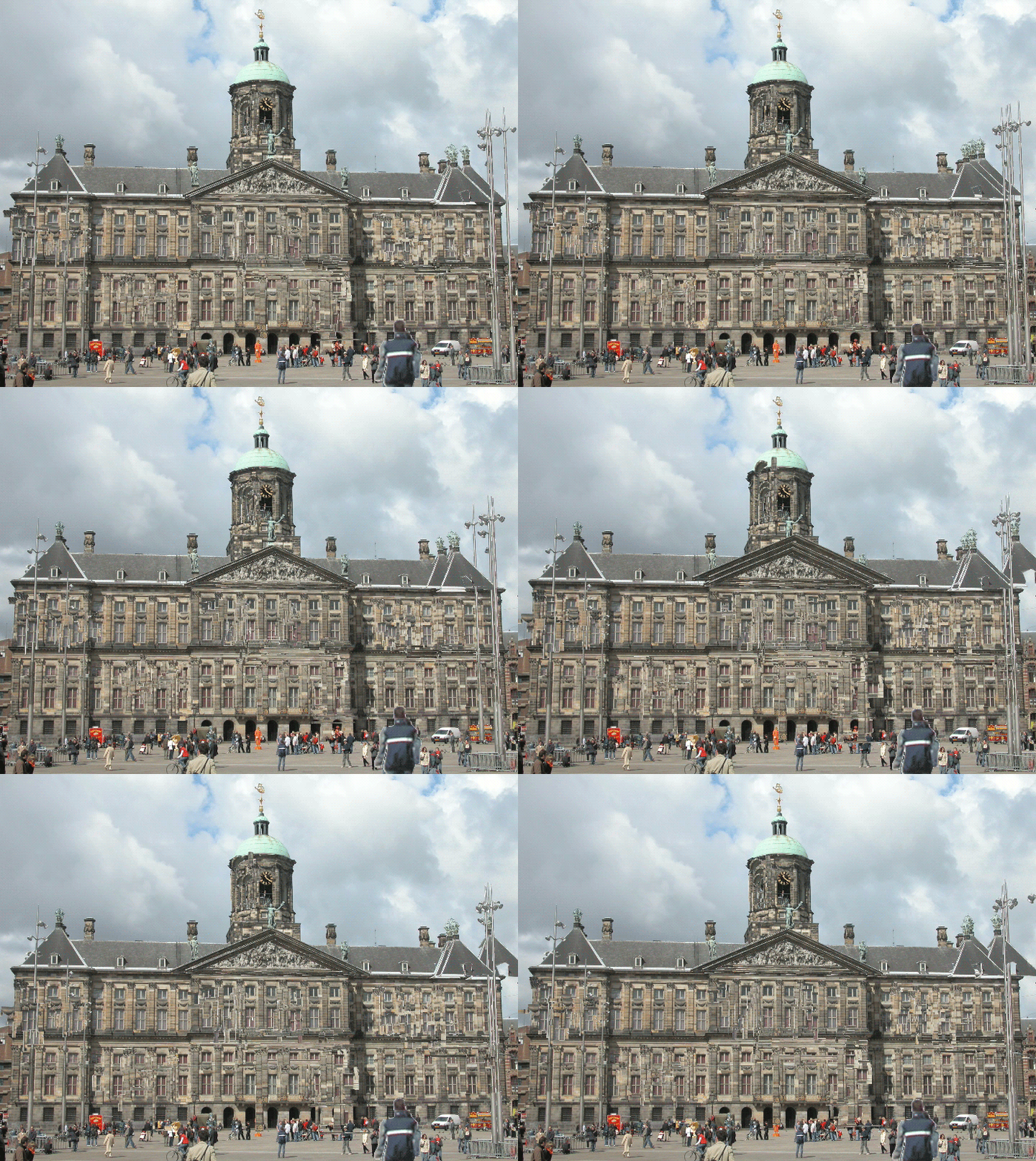
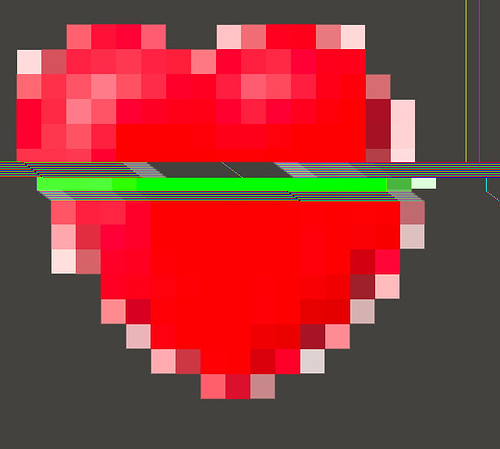
Destroying the bitmap, deconstructing the pixel.

3370854178_a3bb910984_o3370854178_a3bb910984_o3370854178_a3bb910984_o
Deconstructed pixel (heart)
If you would follow stAllio, who has written a great and way more elaborate
tutorial on this kind of image bending, then this effect would have to be called the TextEdit effect (because my method followed the rules of his Wordpad effect, but was executed in TextEdit). But apart from that TextEdit effect doesn't really sound nice, (or does it?) I think this kind of naming of an effect/bent is not sufficient, because the effect is not (just) dependent on the software but on specific changes in the code. Although it is a more general name, I think that the more general term 'image bending' (or data bending, yes mcfiredrill :), still works a lot better.
How its done: open a BMP file in TextEdit (or wordpad, or... ), move some code from here to there and then save it.

7/07/2009

From Weak Ties to Organized Networks

In March 2009 the Institute of Network Cultures brought 12 networks to Amsterdam for a week of getting things done. Aim of the Winter Camp was to confront the virtual networks with the real.
In the Winter Camp the networks focussed on questions like logistics, the handling of conflicts, politics, hierarchies, collaborations, finances, legal structures, copyright problems and dissemination within the different networks. Central issues were how the networks handled their scale in the past and how they would productively proceed being an active, strong network in the future (or why not).
Today, most people take part in the many similar, big, controlled sticky bubbles called networks, that aggregate users and content through different channels within (and outside) the internet. As most of these virtual networks have emerged from a history of veteran cyberspace networks like the demoscene, insight could be gained by asking if these younger networks have similar dynamics as these old hand networks and what sort of political and institutional prehistory might be part of the continuum of political culture in these juvenile networks. Other, recurrent main questions that the Winter Camp dealt with were how to describe specific network models and how to write a network historiography.
At Winter Camp I did some interviews with networks that have ties with the demoscene (dyne.org and Goto10). These interviews are (amongst others) now published, together with other reports, registrations and interviews in a book called From Weak Ties to Organized Networks by the Institute of Network Cultures.
You can order a free copy
here.
Together with the other publications of the Institute of Network Cultures this publication contributes to theory on how to study networks.

Editor: Geert Lovink. Editorial Assistance: Margreet Riphagen.
Publisher: Institute of Network Cultures, Amsterdam.
ISBN: 978-90-78146-08-7.